|
1
|
|
|
2
|
- 1500 international NGOs providing health volunteering services1
- Several hundred U.S. based international health volunteer organizations
exist comprising a portion of the 1500
- 1 billion people lack access to health care globally with 57 countries
designated as access shortage areas
- WHO reports a shortage of 2.4 million healthworkers.
- 39.5 million full-time, paid, health service providers worldwide2
- In 1998, 11.4% (12.47 million) volunteered in health care in the U.S.
alone1
|
|
3
|
- Africa designated as greatest health care access shortage according to
2006 WHO Annual Report
- Trend in Africa: In general, national NGOs made up 50-75% of the total
number of NGOs operating in the health sector, while the presence of
international NGOs increased substantially in countries under
emergencies.2
- During disasters: Sri Lanka had major corruption in NGO usage of cash
donations and in-kind product post-Tsunami.
- Rapid increase in number of NGOs during a disaster can cause corruption
by overwhelming non-profit/volunteer system and thus actually becoming
ineffective.
- Counteracted only when required to use reliable donation usage
evaluation methods
- Best way to evaluate medical groups is by a clinical/outcomes approach
tied to health care costs/savings.
|
|
4
|
- Formal partnership with IADS and HealthCare Volunteer to attract dental
students and member dentists to volunteer in dental shortage locations
around the world.
- Deploy dentists for long-term (6 months – 1 year) into volunteering
locations and have dental students rotate 1-4 weeks through clinics
under the supervision of these deployed dentists.
- Direct volunteering with government clinics in cases of long-term
volunteering and direct involvement with Ministry of Health to maximize
value for patients.
- Room/board/transportation funding: depends on dental status and amount
of time willing to volunteer; longer terms and dentists are more likely
to receive room/board/transportation when volunteering in government
clinics, while shorter terms and dental students are less likely to
receive room/board/transportation when volunteering. For dental
students, grants, fellowships, scholarships will be of use for funding
as will inexpensive arrangements that our organization sets up around
each volunteering location.
|
|
5
|
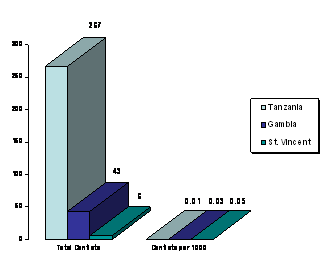
- Tanzania (starting late Feb. 2007)
- The Gambia (starting May, 2007)
- St. Vincent & Grenadines (starting April, 2007)
|
|
6
|
|
|
7
|
- Gain access to new methods of dental treatment in less-developed
countries.
- Cultural/Language appreciation and skills in countries outside of
Europe.
- Streamline requests for dental students to volunteer short-term or to
complete 1-year elective (U.K students, etc.).
- Cost reduction in processing requests for dental volunteers; deploy
more volunteers with less funds.
- Increased number of patients treated in poorer countries using dental
student volunteers
- Create a better model for maximizing dental healthcare delivery by
working in developing countries government-funded clinics; this
facilitates reduction in overhead costs for development of private
clinics for dental healthcare delivery.
- Opportunity for dentists to supervise and work with dental students
from other countries and continents
|

 Notes
Notes